
Make support work together
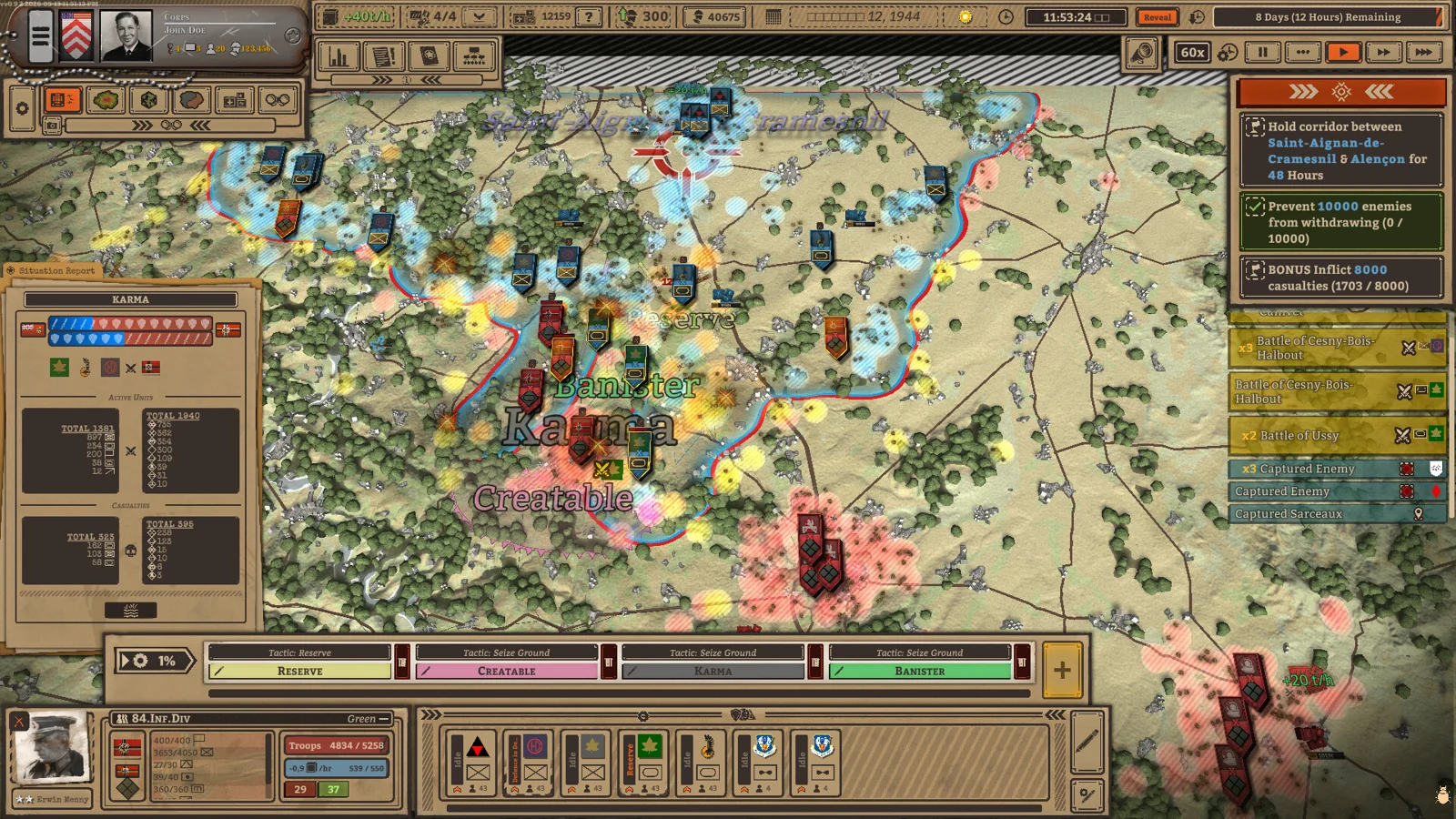
Combine different nearby roles and time the assault to the support window. Extra copies of one role do not create extra copies of the same combined-arms bonus.
Different supporting roles can make the same attacking force more useful. The task is to bring those roles into a coherent operation: learn where the obstacle is, prepare the contact, move the ground force and secure the result. Simply assembling many icons in one place is not a complete combined-arms plan.
Variety has a purpose
The developer describes nearby roles providing distinct, non-stacking bonuses over roughly a square kilometre. Extra copies of a role do not add extra copies of that same benefit. Infantry, armour, engineers, scouts and fire-support elements contribute differently. Engineers also help with mines and prepared positions; reconnaissance improves what you know about the opposition.
Read the combined-arms diary for the published role descriptions. When choosing support, ask which obstacle it helps solve. That makes a missing capability easier to identify than comparing the number of unit types in two armies.
Begin with a question for reconnaissance
Reconnaissance should inform a decision. Are you trying to choose an approach, identify resistance to the main task or understand a threat to the flank? Decide which question matters before committing the next movement. A revealing view of an unrelated sector does not necessarily improve the plan where your force is about to fight.
When information arrives, compare it with the assumption behind the attack. If the original approach no longer makes sense, revise before committing more support to it. Do not treat reconnaissance as a decorative first step in a sequence that will run unchanged regardless of what it shows.
Prepare the obstacle you actually face
Inspect whether the intended contact involves a prepared position, a mine problem or exposed opposition. The appropriate support decision depends on that contact, not only on the units you happen to own. Ask what the support is meant to change and what the ground force will do once the opportunity appears.
Suppose you planned to support an attack at the edge of a settlement, but the force becomes engaged on the approach instead. Reassess the contact location. Repeating the original support action may leave the current fight without the help you intended. The example is a decision exercise, not a claim about a particular mission's best approach.
Match air support to the job
The air-support diary distinguishes reconnaissance, fighter-bomber attacks and available medium-bomber strikes. It describes fighter-bombers as useful against exposed troops, while heavier bombing can create a window against prepared positions. Aircraft do not capture the ground for you. Anti-aircraft opposition also matters when choosing where to send them.
The air-support diary explains those roles. Before using a strike, check whether the ground force is ready to exploit the intended effect. If it is still approaching or reorganising, the plan may need a different sequence. Avoid assuming that an impressive strike means the objective has become secure.
Plan the hand-off to the ground force
Describe the support window in practical terms: what should the attacking formation be ready to do when the support has done its work? This may be moving into the selected contact or securing the gain. If you cannot name that next action, the support plan is incomplete even if every individual action looks useful.
Then check what happens after the first success. Which element holds the ground? Which protects the corridor? Which remains available if opposition appears elsewhere? Combined arms should improve the operation through that transition, not only make the opening engagement look stronger.
Diagnose an attack that still stalls
| Symptom | Question to investigate |
|---|---|
| Support completes before the force arrives | Was the sequence matched to the actual approach? |
| Many identical units are concentrated | Which distinct job still lacks support? |
| The first contact shifts location | Is support still directed at the relevant obstacle? |
| Initial progress stops quickly | Is the assigned ground task, supply or next phase limiting progress? |
| Air activity is ineffective | Does the selected role fit the target and opposition? |
Inspect one of these possibilities at a time when the situation allows. Do not conclude from one failed operation that an entire support role is useless. Equally, do not add every available role to the same location without deciding what it should contribute.
Keep the support plan usable
Check how the formation will remain supplied while the operation unfolds. Sustained contact can change the demands on the army, and a successful advance can change the route behind it. Use the supply guide when the force's condition is deteriorating and the army constructor guide when a recurring support gap needs a roster change.
After the battle, review the support by its intended job. Did it answer the reconnaissance question, help the relevant contact or enable the ground force's next action? That review gives the next attempt a useful change. A list of all the support you used, without those outcomes, does not tell you which part of the plan needs attention.